2026 Midterms · Election Day November 3, 2026
Political DOOH Advertising for the 2026 Midterms
Election Day is November 3, 2026. TV and CTV inventory in battleground markets is already tightening — DOOH is the video channel that still has supply, usually go live within 24 to 48 hours of approval, and never gets bumped by a bigger buyer. County-level targeting, FEC-compliant creative, no blackout dates, clear proposal pricing.
The 2026 window
Scarcity Hits Linear and CTV First. DOOH Absorbs the Overflow.
Industry forecasts project total political ad spend for the 2026 cycle to top $10 billion, and the sharpest scarcity hits September and October in linear TV and CTV. When lowest-unit-rate rules and sold-out CTV pods squeeze late money, DOOH absorbs it: the same voters, on screens along their commute, at the gas pump, in the grocery aisle — bookable this week, live tomorrow.
The argument
Why Campaigns and PACs Buy DOOH Here
No political premium, no blackout dates, clear proposal pricing
Publisher floor price plus a 15% Goldfish platform fee on the media CPM across every venue type with no political premium. usually go live within 24 to 48 hours of approval — react to a poll swing, a debate moment, or an opposition buy the same day.
County- and precinct-shaped geofencing built on AMAP census-block cohorts
County- and precinct-shaped geofencing built on AMAP census-block cohorts reaches persuadable households where they actually move, not where a DMA line pretends they live. Turnout, party proxy, and issue-interest indexes come from the political audience vertical rather than a purchased voter file.
Screens near early-voting centers, county fairs, rally routes, and campus corridors
Early-vote and GOTV surround: screens near early-voting centers, county fairs, rally routes, and campus corridors.
Paid-for-by disclaimers rendered legibly at every screen size
Paid-for-by disclaimers rendered legibly at every screen size — every creative is pre-flighted for FEC and state disclaimer compliance before it goes live. Proof-of-play photography and delivery logs your compliance team and your treasurer will both accept.
Battleground coverage
Live Inventory in Every Marquee Race
The marquee Senate races run through Georgia, Michigan, North Carolina, New Hampshire, Maine, Ohio and Texas, with governors' mansions on the ballot in Arizona, Georgia, Michigan, Nevada, Pennsylvania and Wisconsin. We hold live inventory in every one of these states down to the county level — ask for the battleground availability sheet.
The timeline
From Now to Election Day
Now through Labor Day — lock strategy and creative; persuasion flights begin. September — early-vote states light up; surround registration deadlines and first ballots. October — peak scarcity everywhere else; DOOH is the flex channel that still says yes. Final two weeks — GOTV geofencing on polling-place approach corridors and transit, always outside state electioneering buffers.
Lock strategy and creative; persuasion flights begin.
Surround registration deadlines and first ballots.
DOOH is the flex channel that still says yes.
Geofencing on polling-place approach corridors and transit, outside state electioneering buffers.
Send the race
Put Your Message on Battleground Screens This Week
Campaigns, PACs, and public-affairs teams: send the race, the counties, and the budget — a real plan with real screens comes back the same day.
The 2026 cycle by the numbers
Draw the district, reach the voter
Custom Geofences + Cookieless Voter Data
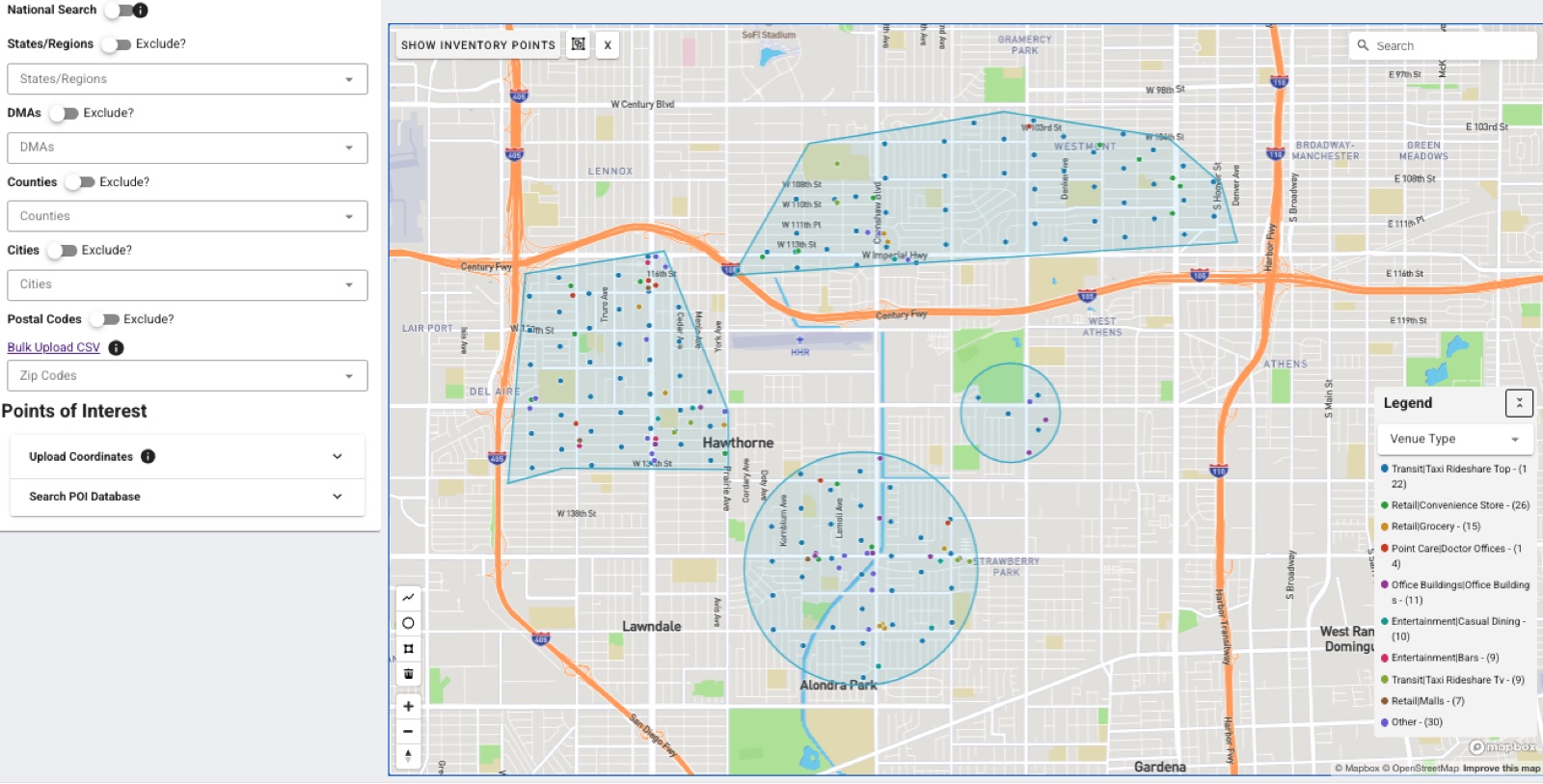
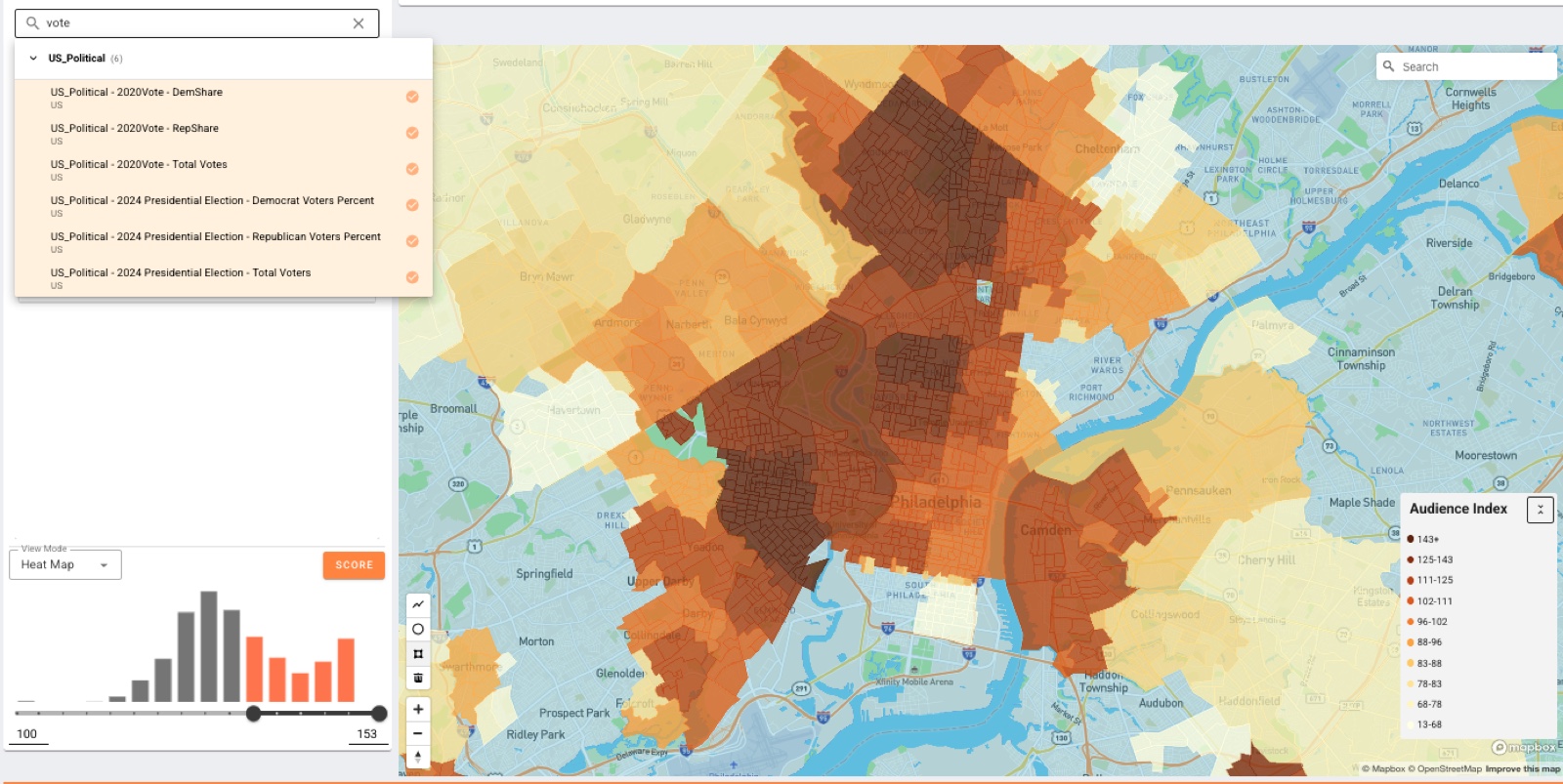
Draw a custom polygon around the exact precincts that decide the race, then surface every available screen inside it by venue type. Layer AMAP census-block voter cohorts on top — 2020 and 2024 vote share modeled from primary sources — to weight delivery toward turnout and persuasion targets. All without a single cookie.
The argument
Why DOOH Wins for Political
Meta and Google boxed political targeting into a corner. DOOH didn't.
Meta bans custom audiences and lookalikes on political ads and limits targeting to age, gender, and general location. Google matches those restrictions. DOOH targets by geography and venue with no such rules and no cookies — the precision political advertisers lost on the walled gardens is still available out here.
The buy matches the ballot, not the DMA
A congressional race shouldn't pay for the whole DMA. Target by county, ZIP, DMA, or upload the district as a custom polygon — the plan only buys screens inside the boundary. Same logic for state legislative races and ballot measures: geography IS the audience. See how DOOH targeting works and geofencing.
No ad blocker on a gas-station screen
The single largest signal that political digital spend is misfiring: the voters most worth persuading are also the most likely to block, mute, or scroll past digital ads. DOOH runs in physical space they can't opt out of — the commute, the grocery aisle, the bar, the highway back home.
Cookieless household audience, modeled from primary sources
AMAP is our proprietary audience data layer built at the census-block level from primary sources — Census household data, Google search behavior signals, Meta interest and affinity signals, and CDC and other primary health and demographic sources. Reach households that index for voter turnout, party proxies, or issue interest at block-level granularity without device IDs, cookies, or bid-stream guesses. The method is documented in political audiences built without voter files. More at amapdata.com.
The most scale in political DOOH
Every Screen. One Plan.
Most political buyers stitch a campaign together across a patchwork of billboard vendors. We put over a million digital screens — every market, nationwide — into a single plan, with access to every major DOOH publisher in one buy: Lamar, Clear Channel, JCDecaux, Outfront, Adams, and thousands more. One plan reaches more political inventory than any single vendor can offer, with creative approvals across thousands of screen owners handled for you.
Real political creative on real screens
From Ballot Measures to Both Sides of the Aisle
Political and civic DOOH runs for every kind of message and every affiliation — ballot measures, debate coverage, and candidate campaigns from city council to governor. We are nonpartisan: same inventory, same targeting, same pricing for Democrats, Republicans, and independents alike.
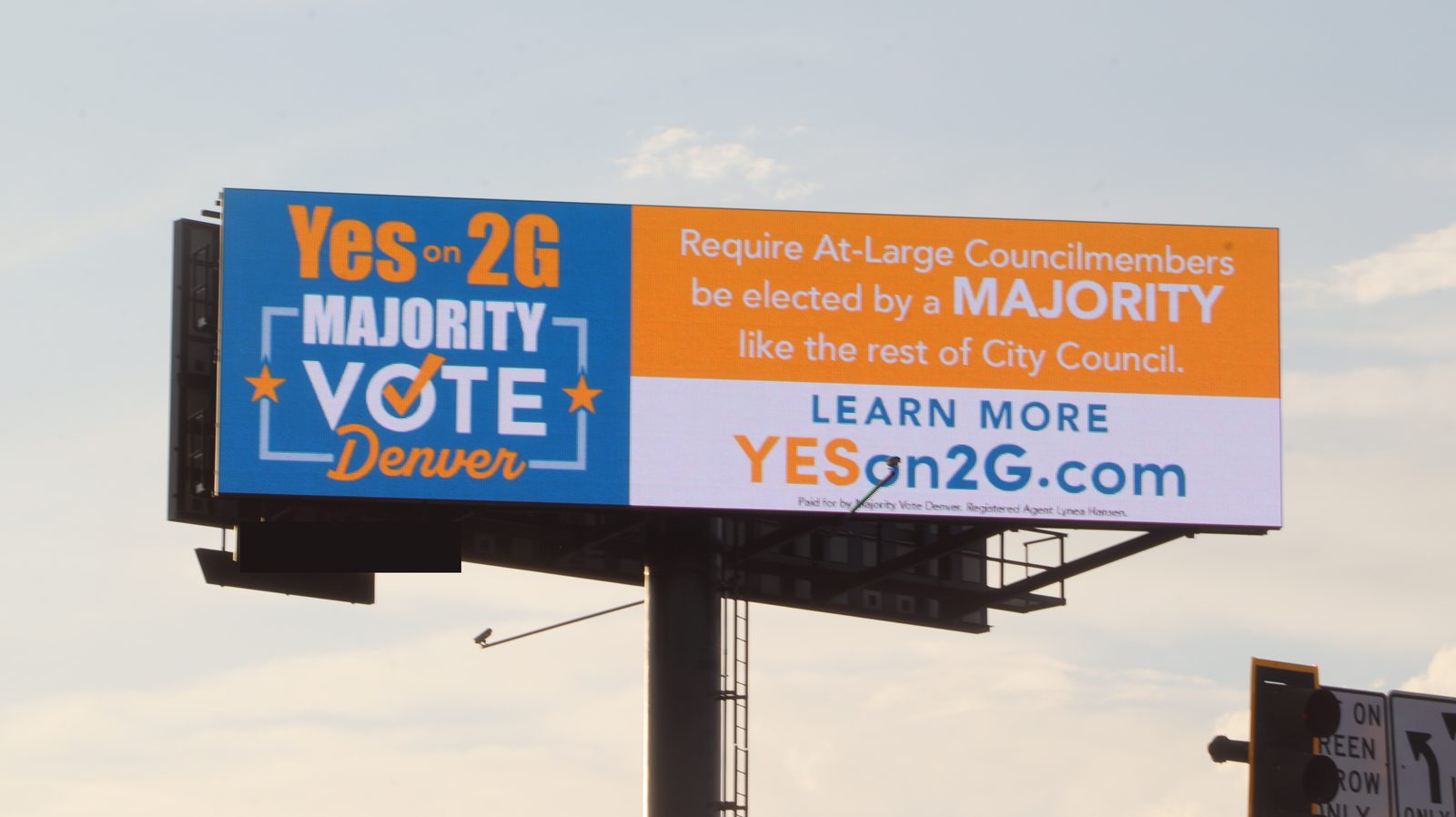
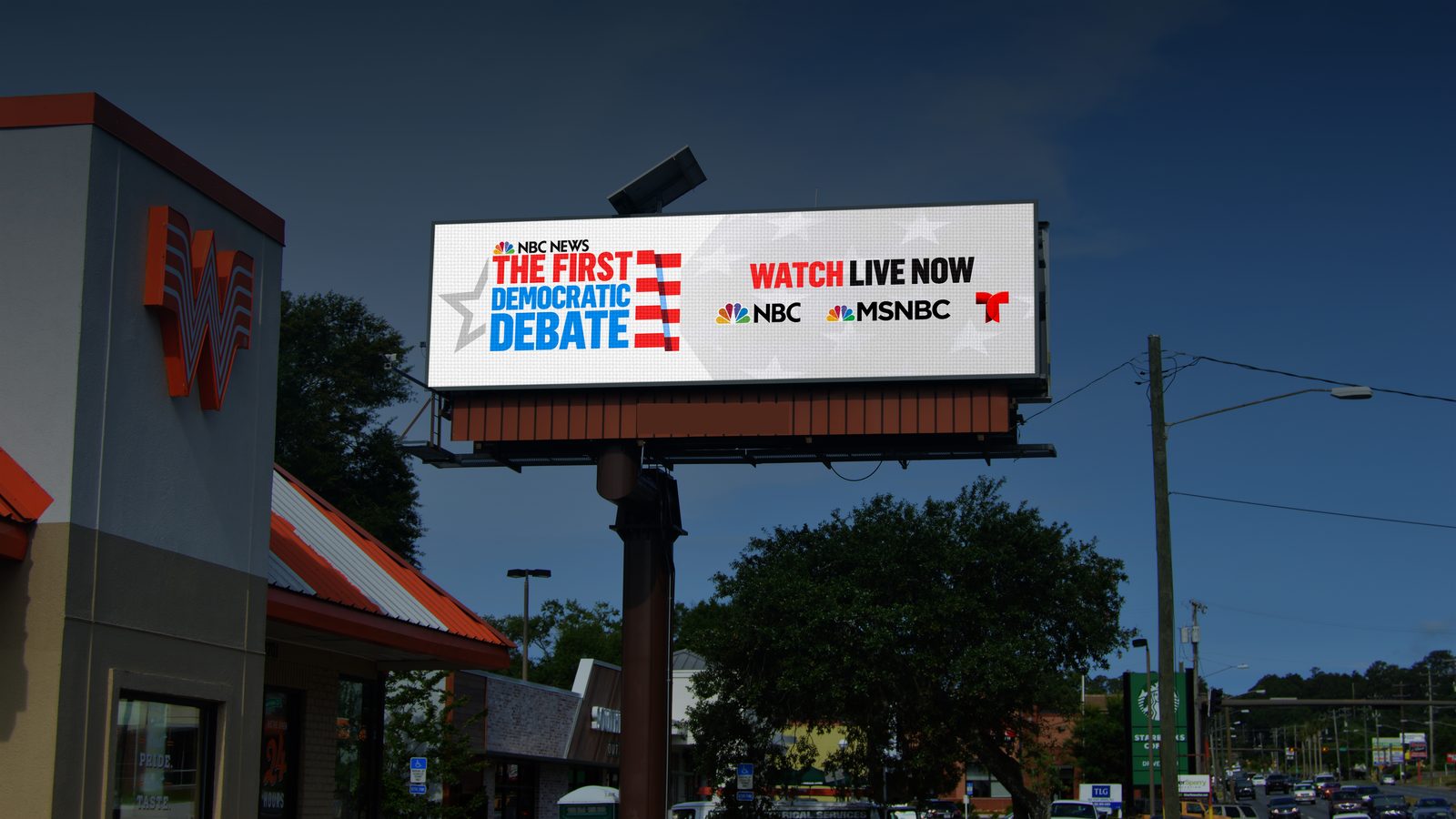
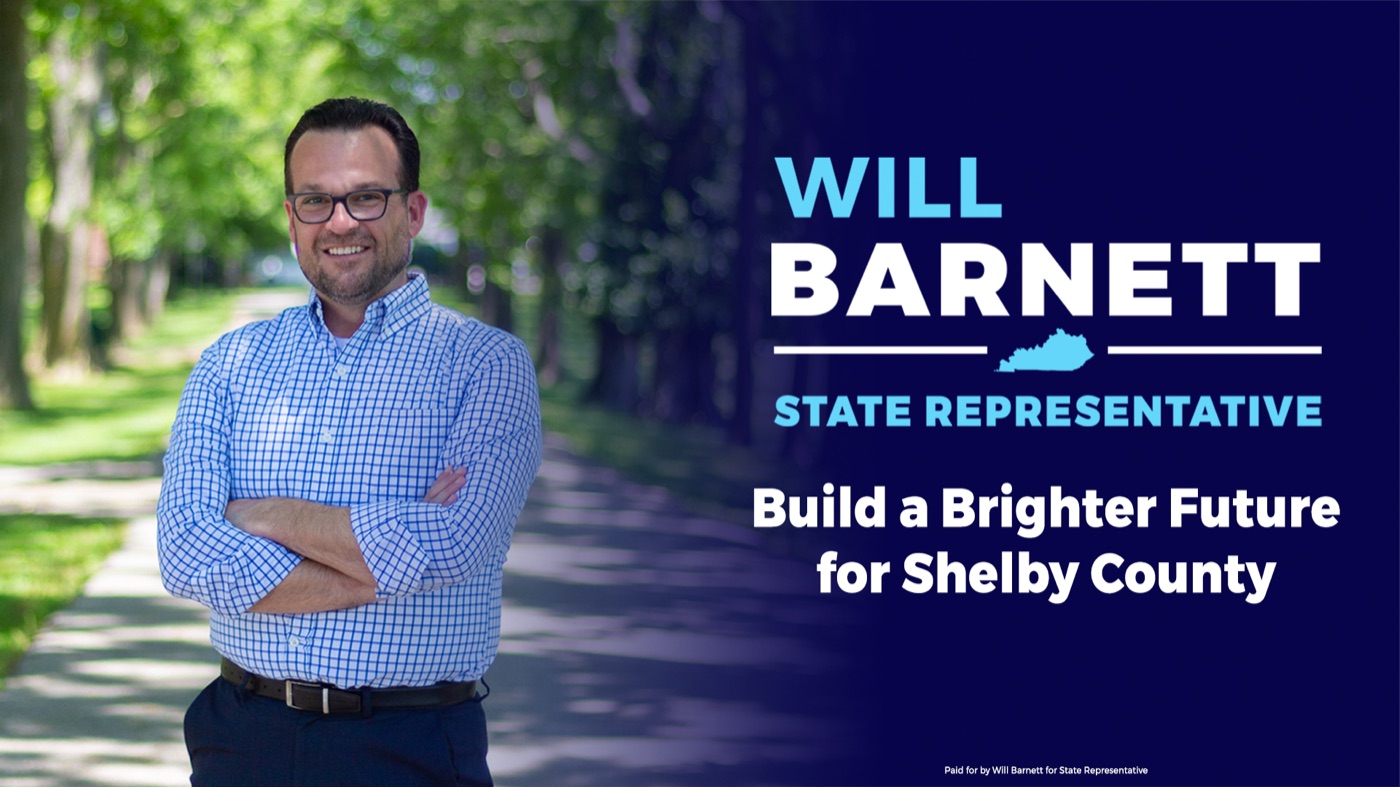
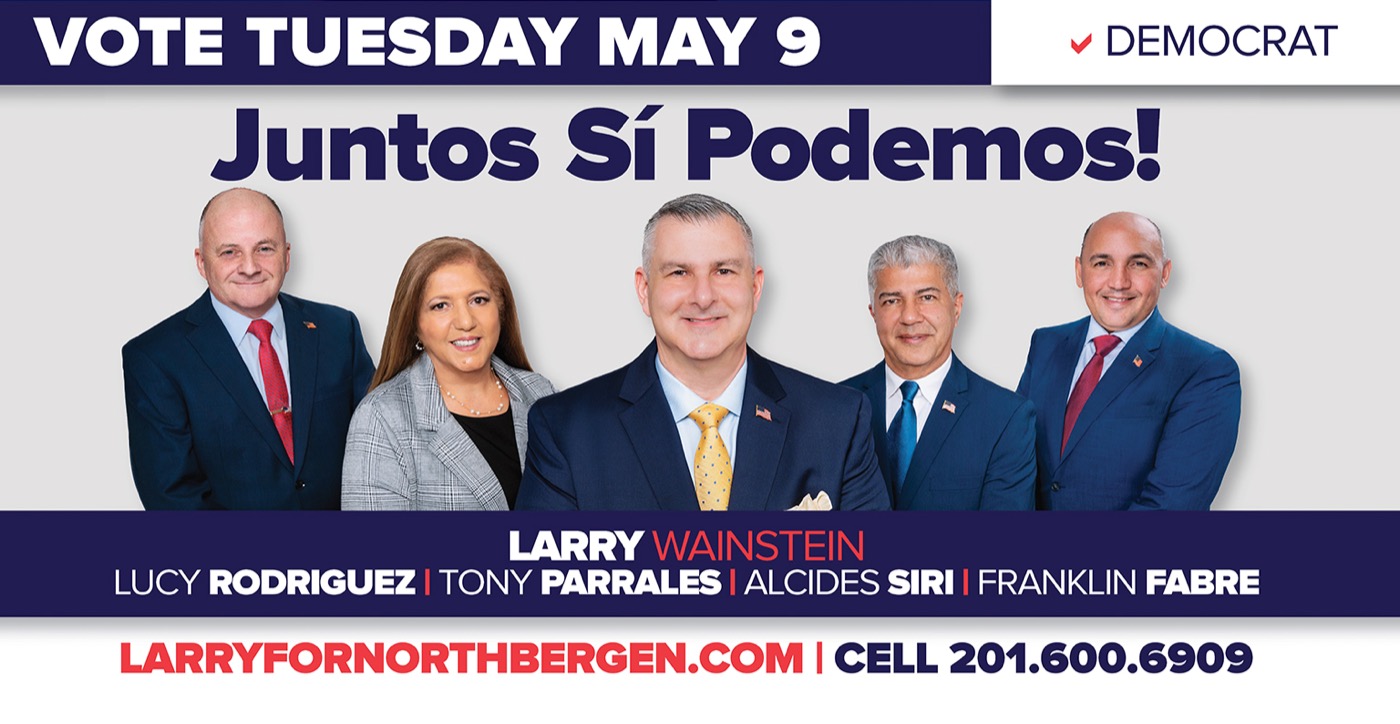
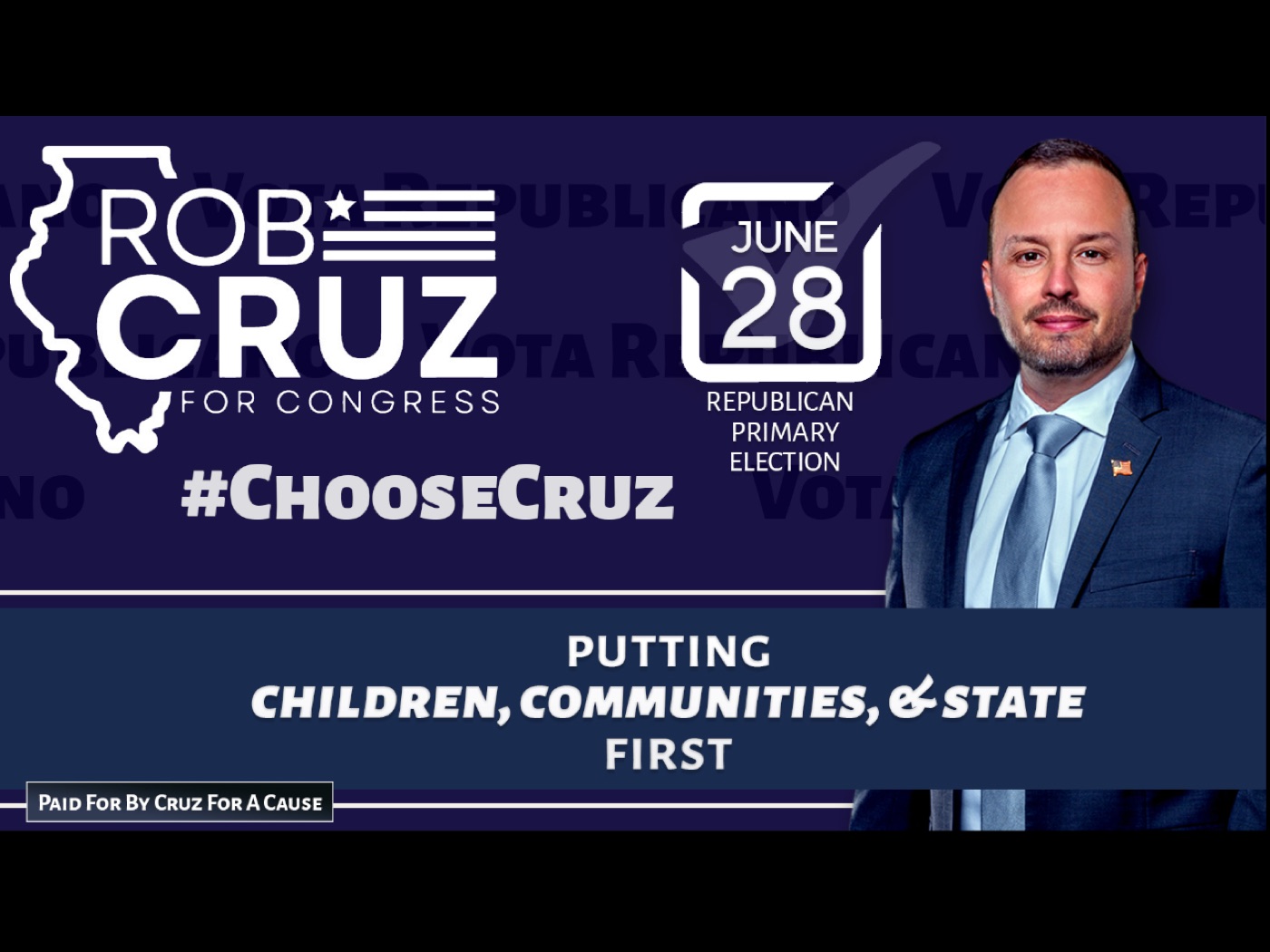
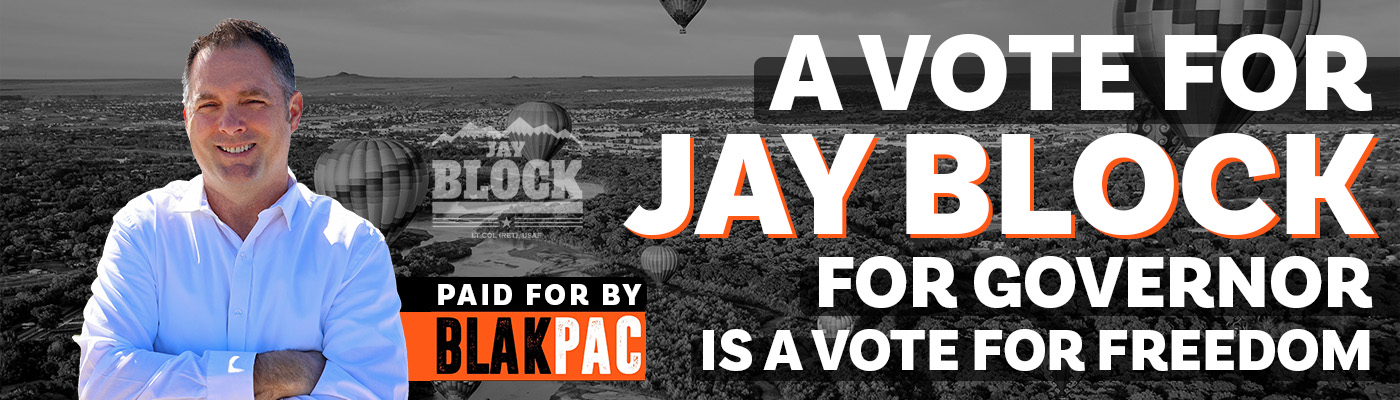
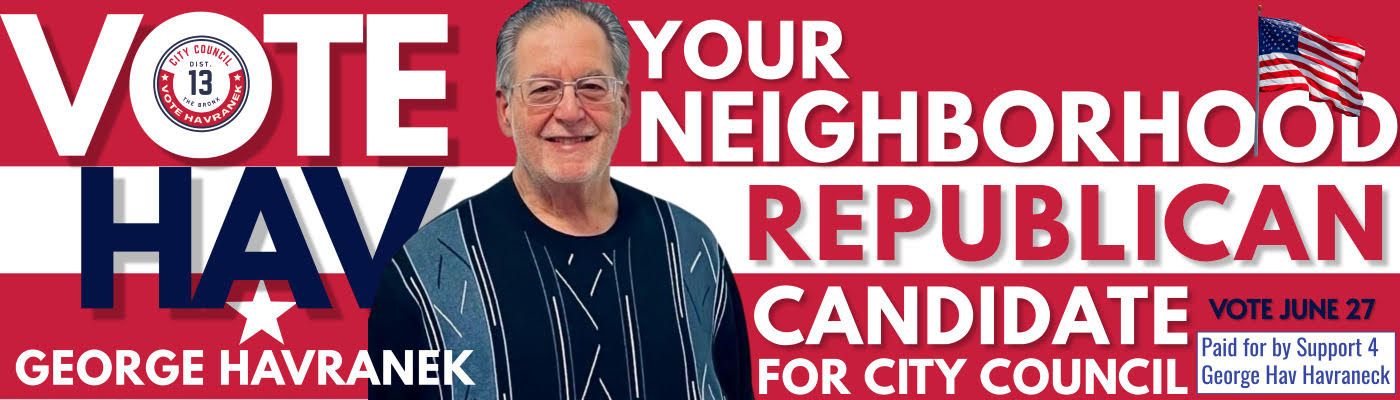
Examples of political and civic advertising in digital out-of-home.
The 2026 political calendar
Six Phases From Now to Election Day
Awareness → persuasion → GOTV. Each phase has a distinct DOOH play, a distinct venue mix, and a distinct measurement KPI. Plan the whole cycle in one sitting instead of buying reactive TV week by week.
Late-cycle primaries in a handful of states plus runoff elections. Concentrated DMA-wide DOOH pushes 10–14 days out — the awareness layer that turns name-recognition into ballot recognition.
Most state deadlines fall between October 5 and October 20, 2026. Transit, campus, and grocery panels drive registration behavior in the districts that swing on turnout.
Most states open early in-person voting between October 15 and October 25, 2026. DOOH persuasion flights peak here — voters are literally deciding this week, not on Election Day.
Every remaining undecided voter is now being reached by TV, mail, digital, and door-knocks. DOOH is the frequency layer that keeps the message present between all of them — commute, grocery, gas, gym.
The get-out-the-vote sprint. Precinct-adjacent DOOH inventory dayparted for morning and evening commute. Every impression is a turnout reminder, not a persuasion attempt.
Poll-adjacent panels, transit, and arterial billboards run until polls close. Legal in most jurisdictions outside the buffer zone; check state electioneering rules per market.
Venue playbook for campaigns
Match the Venue to the Voter Moment
Gas stations and convenience for daily in-district commute reach. Grocery for household decision-makers. Bars and casual dining for younger and irregular voters. Community and transit for urban density. Billboards on district arterials for the persistent brand layer. Each name below links through to its venue guide.
Compliance & creative
Get the Creative Right Once, Ship It Everywhere
Disclaimer: Political creative must carry a legible "Paid for by [committee name]" stamp per FEC rules; PAC and IE ads add "and not authorized by any candidate or candidate's committee." State and local disclaimer rules vary — check the state election commission for statewide races and ballot measures. Publishers reject any creative without a legible disclaimer, so build it into the asset file itself in a high-contrast bottom bar.
Approval lead time: First-time political creative typically takes 24–72 hours for publisher review. Subsequent creatives from the same advertiser clear inside a business day. For rapid-response ads (debate moment, news cycle), keep a pre-approved creative shell on file with the disclaimer already in place — swap the message, re-approve, usually go live within 24 to 48 hours of approval.
Five specs cover most inventory: Vertical 1080×1920, horizontal 1920×1080, square 1080×1080, wide landscape 1400×400, and portrait bulletin 840×400 cover the large majority of DOOH inventory. See the full creative specs list for per-venue details, file weights, and safe-title zones for disclaimers.
One hard rule: No QR codes in political DOOH creative. Voters are driving, walking, or in a checkout line — they don't scan. Use short URLs, an SMS keyword ("Text VOTE to 12345"), or "Search [Candidate Name]" prompts instead. This is a house rule for everything we ship.
Who this is for
Every Buyer in the Political Ecosystem
House, Senate, gubernatorial, state legislative, and municipal candidates. DOOH gives district-level precision that TV DMAs can't match — a congressional race doesn't need to pay for the whole DMA.
Super PACs, hybrid PACs, and independent expenditure groups. DOOH runs cleanly under FEC disclaimer rules with pre-approved 'Paid for by' creative templates.
Referenda, initiatives, and bond measures. Geography IS the audience: ballot measures live inside one state or one municipality — DOOH matches the ballot boundary exactly.
501(c)(4) issue groups, coalitions, and public-affairs firms. Reach elected officials and voters in DC, state capitals, and around specific committee hearings using venue-level targeting.
Also built for political agencies buying across multiple races: one platform, one login, per-client campaign codes, and a single reporting surface.
Six pre-built packages
Pick a Play. Ship It This Week.
Every package is pre-mapped and ready to activate once the district and creative arrive. Combine two for full-funnel coverage — awareness plus GOTV, ballot-measure plus candidate persuasion.
Blanket a US House or state-legislative district with billboards, gas-station, and grocery panels for the final four weeks. Impression-heavy, message-consistent.
Two-week persuasion flight timed to each state's early-voting window. Frequency-weighted to catch every commute between the ballot drop and Election Day.
High-frequency turnout sprint across the last three days. Precinct-adjacent inventory dayparted for morning and evening commute — the reminder layer.
Statewide or municipal-wide awareness flight for referenda and bond measures. Geography IS the audience; runs 6–8 weeks before Election Day.
Compressed 10–14 day awareness burst for runoff and special elections. Concentrated flight, DMA-wide, all-format.
US Senate and gubernatorial coverage across every DMA in the state. Multi-format mix balanced by DMA population and competitive rating.
Send us the district
Send Us the District. We'll Send Back the Plan.
Give us the district boundary (or the ZIP list, or the county set), the flight window, and the budget range. We come back with a costed inventory brief inside one business day.
Frequently asked
Political DOOH FAQ
Keep planning
DOOH targeting
Geography, venue, audience, POI — the full targeting surface
Geofencing
Custom polygons, ZIP lists, county buys for district-level DOOH
Creative specs
Five specs that cover most inventory — plus disclaimer-safe zones
General FAQ
Costs, measurement, and how DOOH buys actually clear
DOOH statistics 2026
Sourced industry figures for planning decks
Football season DOOH
Fall game-day audiences near stadiums, bars and tailgates
Case studies
Live campaign results across verticals
Ready to run political DOOH in your district?
Send us the district and the flight window — we return a costed plan inside a business day. No QR codes, no cookies, no lookalikes required.
Contact Us Now